
The Psalms, a collection of sacred poetry, offer diverse applications – from liturgical practice and spiritual growth to seeking guidance and even, historically, ceremonial uses.
PDF resources detail these varied intentions, categorizing Psalms for thanksgiving, petition, and specific needs like health or reconciliation, as seen in downloadable collections.
Throughout history, these texts have been utilized in translation, commentary, prayer, and musical composition, demonstrating their enduring relevance and adaptable nature.
Historical Context of the Psalms
The Psalms emerged over centuries, originating in ancient Israelite worship, reflecting a rich tapestry of historical and religious experiences. Early uses, documented in PDF collections, reveal their integral role in temple liturgy, royal ceremonies, and personal devotion, dating back as early as 1000 BCE.
Initially, many Psalms were communal, sung by choirs during worship, while others were individual expressions of faith, lament, or thanksgiving. The collection evolved over time, with contributions from various authors, including David, Asaph, and the sons of Korah.
Historical practices, as outlined in some PDF resources, also suggest ceremonial and even magical applications developed later, though these were often debated. Understanding this historical development is crucial for interpreting the diverse themes and purposes found within the Psalter, and appreciating their enduring legacy.
The Psalms in Jewish and Christian Tradition
Within Judaism, the Psalms (Tehillim) form a core component of daily prayer, Sabbath and festival liturgy, and personal devotion, with specific Psalms assigned to different occasions. PDF guides often detail these traditional associations, highlighting their use in mourning rituals and celebrations.
Christian tradition embraced the Psalms from its earliest days, viewing them as prophetic foreshadowings of Jesus Christ and integral to worship. The early Church Fathers extensively referenced the Psalms, and they remain central to both Catholic and Protestant liturgical practices.
PDF resources demonstrate how Psalms are incorporated into the Divine Office, hymns, and responsive readings. Both traditions recognize the Psalms’ power for spiritual formation, offering solace, guidance, and a pathway to deeper communion with the Divine.

Understanding Psalm Categorization
Psalm classifications – lament, thanksgiving, wisdom – aid in understanding their purpose, as detailed in PDF guides listing Psalms for specific intentions and spiritual needs.
Psalms of Lament
Psalms of Lament express profound sorrow and appeal to God during times of trouble, forming a significant portion of the Psalter. PDF resources organizing Psalms by use categorize these expressions of grief, offering guidance for individuals facing hardship.
These Psalms aren’t simply complaints; they often move from acknowledging suffering to requesting divine intervention and ultimately, expressing trust in God’s faithfulness. Examples, frequently listed in downloadable collections, demonstrate a pattern of pain, petition, and praise.
Historically, and as detailed in various PDF documents, these were used for communal and personal mourning, providing a script for voicing distress and seeking solace. They offer a powerful means of connecting with God in vulnerability, acknowledging pain while maintaining hope.
Psalms of Thanksgiving and Praise
Psalms of Thanksgiving and Praise represent joyous responses to God’s blessings and demonstrate adoration for His character. PDF guides categorizing Psalms by intention highlight these expressions of gratitude, offering examples for personal and communal worship.
These Psalms often detail specific acts of deliverance or provision, prompting heartfelt praise and recognition of God’s goodness. Downloadable collections frequently include Psalms focused on celebrating God’s creation, His faithfulness, and His loving-kindness.
Historically, as outlined in various PDF resources, these were central to liturgical practice and personal devotion, fostering a spirit of thankfulness. They serve as powerful reminders to acknowledge God’s hand in all aspects of life, cultivating a grateful heart.
Psalms of Wisdom
Psalms of Wisdom delve into profound truths about life, morality, and the nature of God, offering guidance for righteous living. PDF resources detailing Psalm usage categorize these texts as sources of practical instruction and spiritual discernment;
These Psalms often explore themes of justice, righteousness, and the consequences of choices, encouraging readers to seek wisdom and understanding. Downloadable collections frequently include Psalms that contrast the paths of the righteous and the wicked, highlighting the benefits of obedience.

Historically, as indicated in available PDF documents, these were valued for their ethical teachings and their ability to shape character. They provide timeless principles for navigating life’s challenges and fostering a close relationship with God.
Specific Psalms and Their Traditional Uses
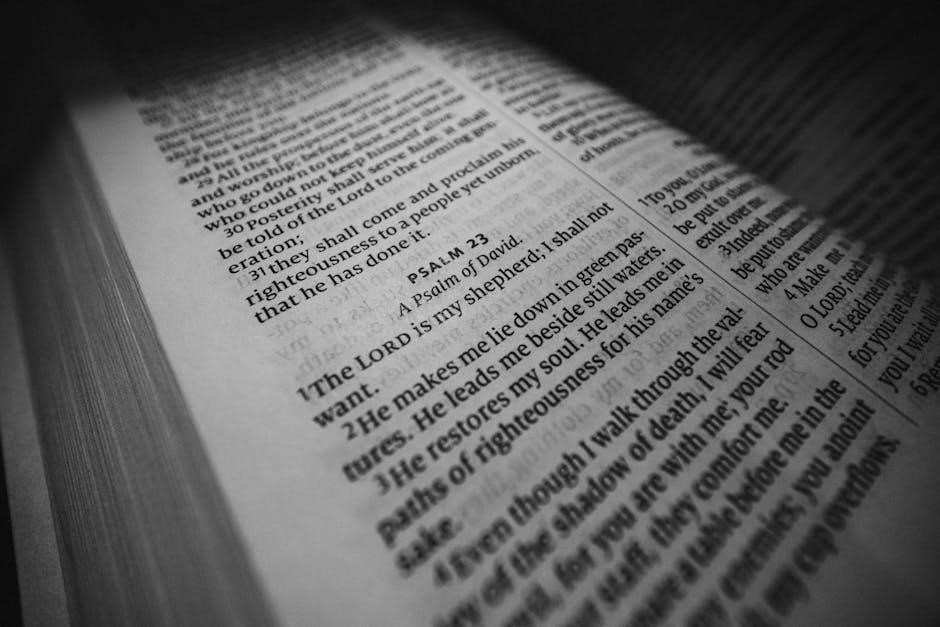
PDF guides detail how Psalms 23, 91, 51, and 139 are traditionally used for comfort, protection, repentance, and understanding God’s all-knowing nature.
Psalm 23: The Shepherd’s Psalm ⸺ Comfort and Guidance
Psalm 23, famously known as “The Shepherd’s Psalm,” consistently appears in PDF resources detailing Psalm uses, primarily for seeking comfort during times of distress and receiving divine guidance.
Its imagery of a caring shepherd leading his flock resonates deeply, offering reassurance of God’s protective presence and provision. Many downloadable collections categorize it under themes of trust, peace, and spiritual nourishment.
Historically, this Psalm has been recited during periods of grief, illness, or uncertainty, providing solace and a sense of hope. PDF guides often suggest its use in prayer for emotional healing and clarity of purpose.
The Psalm’s gentle tone and vivid metaphors make it accessible to all, solidifying its place as a cornerstone of faith and a source of enduring comfort for believers worldwide.
Psalm 91: Protection and Security
Psalm 91, frequently highlighted in PDF lists of Psalms and their uses, is renowned for its powerful declarations of divine protection and security against harm. It’s often categorized under intentions related to safety, overcoming fear, and seeking refuge.
Downloadable resources emphasize its verses as a shield against adversity, promising deliverance from danger, disease, and the schemes of the wicked; Historically, it’s been recited during times of war, plague, or personal threat.
PDF guides suggest utilizing Psalm 91 in prayer for loved ones facing challenges, or for creating a sense of spiritual fortification. Its imagery of God as a fortress and refuge provides profound reassurance.
The Psalm’s enduring appeal lies in its promise of unwavering protection, making it a beloved source of strength and hope for those seeking divine safeguarding.
Psalm 51: Repentance and Forgiveness
Psalm 51, a penitential Psalm, consistently appears in PDF compilations detailing Psalms and their uses, specifically categorized under intentions concerning repentance, seeking forgiveness, and spiritual cleansing. It’s a heartfelt plea for mercy and restoration.
Downloadable guides often present it as a powerful tool for acknowledging sin, expressing remorse, and requesting God’s purifying grace. Its verses are frequently employed during times of personal confession and seeking reconciliation.
PDF resources suggest reciting Psalm 51 when burdened by guilt or seeking a fresh start. The imagery of being washed clean and renewed resonates deeply with those desiring spiritual healing.
This Psalm’s enduring relevance stems from its honest portrayal of human fallibility and God’s boundless compassion, offering solace and hope for forgiveness.
Psalm 139: God’s Omniscience
Psalm 139, frequently featured in PDF lists of Psalms and their uses, is categorized under intentions relating to spiritual awareness and recognizing God’s all-encompassing presence. It powerfully affirms God’s complete knowledge of us – our thoughts, actions, and even our innermost being.
Downloadable resources often highlight its use for cultivating a sense of divine companionship and finding comfort in God’s unwavering attention. It’s a reminder that we are never truly alone.
PDF guides suggest reciting Psalm 139 when seeking deeper understanding of God’s character or desiring to feel closer to the divine. Its verses inspire awe and reverence.
The Psalm’s exploration of God’s omnipresence offers reassurance and challenges us to live with integrity, knowing we are always seen and known.

The Psalms in Liturgical Practice
Liturgical traditions—Catholic, Protestant, and Orthodox—incorporate Psalms, often detailed in PDF guides, for prayer, responsive readings, and musical settings during worship services.
Psalms in the Catholic Mass
Within the Catholic Mass, Psalms hold a central role, particularly the Responsorial Psalm following the first reading. PDF resources outlining liturgical practices demonstrate how specific Psalms are assigned to different days and seasons within the liturgical year.
Historically, and continuing today, certain Psalms were designated for use at the offertory, influencing the disposition of alms. Modern Catholic parishes in Russia, as documented in scholarly articles, maintain these traditions.
The selection isn’t arbitrary; Psalms are chosen to complement the themes of the readings, enhancing the spiritual connection for the congregation. PDF guides often provide suggested Psalm choices based on the liturgical calendar and scripture themes, aiding priests and liturgical planners.
These Psalms are integral to the structure and spiritual depth of the Mass, fostering a dialogue between scripture, prayer, and communal worship;
Psalms in Protestant Worship
Protestant worship frequently incorporates Psalms, though the specific usage varies widely across denominations. PDF resources detailing historical and contemporary worship practices reveal a strong emphasis on Psalm singing and recitation.
Many Protestant traditions utilize Psalms as responsive readings, where a leader reads a verse and the congregation responds, fostering communal participation. Some denominations prioritize metrical Psalm settings – adapting the Psalms into hymn form.
The selection of Psalms often aligns with the sermon theme or the liturgical season, providing scriptural grounding for the message. PDF guides can assist in finding Psalms relevant to specific theological concepts or pastoral needs.
Historically, the Psalms were central to Reformed theology, influencing hymnody and devotional life, a legacy reflected in current worship styles.
Psalms in Orthodox Christian Services
Orthodox Christian services deeply integrate Psalms, viewing them as foundational to liturgical prayer and spiritual life. PDF resources outlining Orthodox worship traditions demonstrate the extensive use of Psalmic verses throughout the Divine Liturgy and other services.
Psalms are chanted, not simply read, employing specific melodic modes (tones) that convey theological meaning. Entire services, like Vespers and Matins, are structured around Psalm readings and hymns.
Specific Psalms are assigned to particular feast days and commemorations, enriching the liturgical experience. PDF guides often categorize Psalms by their thematic relevance to various liturgical occasions.
The Psalter is divided into sections for daily readings, ensuring consistent engagement with the entirety of the Psalms throughout the liturgical year, fostering continuous prayer and contemplation.

Practical Applications of Psalm Usage
PDF guides categorize Psalms for diverse intentions: spiritual awareness, seeking fortune, health, reconciliation, and justice, offering verses for specific life challenges and needs.
Psalms for Spiritual Awareness
Utilizing Psalms for cultivating spiritual awareness involves engaging with texts that foster introspection and a deeper connection with the divine. PDF resources detailing Psalm usage often highlight specific passages conducive to this practice.
Psalms of lament, surprisingly, can aid awareness by acknowledging and processing difficult emotions, paving the way for spiritual growth. Conversely, Psalms of praise, like those found in downloadable collections, elevate consciousness through gratitude and adoration.
Psalm 139, exploring God’s omniscience, encourages self-reflection and understanding of divine presence. Resources suggest consistent reading and meditation on these verses to enhance spiritual perception. The intention is to move beyond rote recitation and into a heartfelt dialogue with the sacred, fostering inner peace and clarity.
Psalms for Seeking Luck and Fortune
Historically, certain Psalms have been associated with attracting favorable outcomes, a practice documented in various PDF guides detailing Psalm usage for specific intentions. While theological perspectives vary, the belief persists in seeking divine assistance for worldly concerns.
These practices often involve reciting specific Psalms with focused intention, sometimes as part of ceremonial or ritualistic acts. The exact Psalms considered ‘lucky’ differ across traditions, but some appear frequently in lists compiled within these downloadable resources.
It’s crucial to approach such practices with ethical consideration, recognizing that true fortune lies in aligning with divine will, not manipulating it. Resources emphasize using Psalms for positive purposes and avoiding attempts to harm others.
Psalms for Health and Healing
Numerous PDF resources categorize Psalms specifically for seeking physical, emotional, and spiritual well-being. These lists often highlight Psalms believed to offer comfort during illness, promote recovery, and instill a sense of peace amidst suffering.
Psalm 23, with its imagery of restoration, frequently appears in these compilations, alongside others expressing trust in God’s protective care. Practices involve reciting these Psalms during personal prayer, or as part of communal healing services.
It’s important to note that Psalm usage for health is generally viewed as complementary to, not a replacement for, conventional medical treatment. Faith and prayer are seen as bolstering the healing process, offering hope and strength.
Psalms for Reconciliation and Justice
PDF guides detailing Psalm usage frequently categorize selections for resolving conflict, seeking forgiveness, and advocating for fairness. These resources often emphasize Psalms that lament injustice and plead for divine intervention on behalf of the oppressed.
Psalms like 51, focused on repentance and cleansing, are included for personal reconciliation, while others, expressing righteous anger against wrongdoing, are used to inspire action towards justice.
The intention is to utilize these Psalms as a means of seeking both personal and societal healing, fostering empathy, and promoting equitable treatment. They serve as a powerful expression of faith’s commitment to restorative principles.

Resources for Studying the Psalms
Numerous online databases and PDF downloads offer Psalm collections, commentaries, and scholarly works, detailing their historical context and diverse practical applications.
Online Psalm Resources and Databases
A wealth of digital resources exists for exploring the Psalms, offering convenient access to texts, commentaries, and categorized lists of Psalms and their uses in PDF format.
Several websites compile Psalm collections organized by intention – for example, Psalms for spiritual awareness, seeking fortune, health, or reconciliation, mirroring guidance found in downloadable documents.
Online databases often feature searchable texts, allowing users to pinpoint Psalms relevant to specific needs or themes, alongside scholarly interpretations and historical context.
Researchers and practitioners can find valuable insights through these platforms, accessing information on liturgical applications, magical practices (with ethical considerations), and New Testament references.
These resources facilitate deeper understanding of the Psalms’ enduring relevance across Jewish, Christian, and even historical ceremonial traditions, providing a comprehensive study experience.
PDF Downloads of Psalm Collections
Numerous PDF collections compile Psalms categorized by their traditional uses, offering a readily accessible format for study and practical application. These downloads often mirror online databases, providing organized lists for various intentions.
Common themes within these collections include Psalms for thanksgiving and praise, seeking comfort, repentance, and divine protection, alongside those intended for reconciliation and justice.
Historical practices are also documented, detailing ceremonial or magical uses, though ethical considerations are increasingly emphasized alongside these traditions.
These PDFs frequently include introductory material on the historical context of the Psalms and their significance within Jewish and Christian traditions.
Researchers benefit from easily downloadable resources, facilitating in-depth study and comparative analysis of different Psalm collections and their associated interpretations.
Commentaries and Scholarly Works on the Psalms
Extensive scholarly works delve into the historical, literary, and theological depths of the Psalms, often referencing the diverse uses outlined in downloadable PDF collections.
These commentaries explore the Psalms’ evolution through translation and interpretation, examining their role in liturgy, prayer, and musical composition across millennia.
Researchers analyze the Psalms’ presence in the New Testament, tracing references in the Gospels and Pauline epistles, providing context for their enduring spiritual significance.
Critical analysis extends to historical practices, including magical and ceremonial applications, alongside ethical considerations surrounding such uses.

Scholarly PDFs often offer detailed exegesis, illuminating the nuances of each Psalm and its intended purpose, enriching understanding beyond simple lists of applications.

The Psalms in the New Testament
New Testament authors frequently referenced Psalms, demonstrating their continued authority and relevance, as detailed in scholarly PDFs exploring scriptural connections.
References to Psalms in the Gospels
Gospel writers skillfully integrated Psalms to affirm Jesus’ identity and fulfill prophetic scriptures, often referencing specific verses to highlight key moments in His ministry.
For example, Psalm 22’s depiction of suffering resonated with Jesus’ crucifixion, while Psalm 110’s portrayal of the Messiah as Lord was applied to Him directly.
PDF resources analyzing New Testament usage demonstrate how these allusions weren’t merely coincidental, but deliberate connections intended to reveal Jesus as the promised Messiah.
These references served to authenticate Jesus’ claims and demonstrate continuity between the Old and New Testaments, enriching the narrative and deepening understanding.
Furthermore, the Gospels showcase how Jesus himself utilized Psalm passages, particularly during moments of prayer and contemplation, solidifying their importance.
Exploring these connections through available PDFs reveals a rich tapestry of intertextuality, illuminating the profound theological significance of the Psalms within the Gospel accounts.
Pauline Use of the Psalms
Paul’s letters demonstrate a consistent and sophisticated engagement with the Psalms, employing them to articulate theological concepts and address practical concerns within early Christian communities.
He frequently quoted or alluded to Psalm passages to support arguments regarding justification by faith, the nature of Christ, and the relationship between Jews and Gentiles.
PDF analyses of Pauline writings reveal a preference for certain Psalms, such as Psalm 19, which informed his understanding of God’s revelation, and Psalm 14, highlighting human depravity.
Paul utilized the Psalms not simply as proof-texts, but as a framework for interpreting the significance of Christ’s death and resurrection.
Available resources showcase how he skillfully adapted Psalm imagery to convey complex theological ideas in accessible ways.
Studying these connections through downloadable PDFs illuminates Paul’s masterful use of the Old Testament to build a compelling case for the Gospel message.
Magical and Ceremonial Uses of Psalms
Historically, Psalms were integrated into rituals and magical practices, with specific verses believed to hold power for various purposes, detailed in PDF guides.
Historical Practices and Beliefs
Throughout the centuries, the Psalms have been interwoven with practices extending beyond purely devotional contexts. Historical records, often found within downloadable PDF collections detailing psalm usage, reveal beliefs in their potent power for influencing events and individuals.
Certain Psalms were traditionally employed in ceremonies intended to achieve specific outcomes – from seeking protection and averting misfortune to influencing relationships and pursuing justice. These practices weren’t universally accepted, existing alongside mainstream religious interpretations.
The belief that Psalms could be utilized for “magical work” stemmed from a perception of their inherent spiritual energy and divine connection. PDF resources often categorize Psalms based on these perceived applications, outlining intended purposes and methods of recitation or ritualistic use.
These historical beliefs demonstrate a complex relationship between faith, ritual, and the perceived power of sacred texts, documented in various scholarly works and accessible PDF guides.
Ethical Considerations
Exploring the historical and ceremonial uses of Psalms, as detailed in numerous PDF resources, necessitates careful ethical consideration; While some traditions view Psalms as tools for influencing outcomes, this raises questions about free will and divine sovereignty.
The intent behind Psalm usage is paramount. Employing them to manipulate or harm others contradicts core religious principles of love, compassion, and justice. PDF guides often lack explicit ethical frameworks, leaving interpretation to the individual.
A responsible approach involves focusing on the Psalms’ devotional and spiritual benefits – seeking comfort, guidance, and a deeper connection with the divine – rather than attempting to control external circumstances.
Critical discernment is crucial when encountering claims of magical efficacy. Prioritizing ethical conduct and respectful engagement with scripture ensures alignment with positive spiritual values.