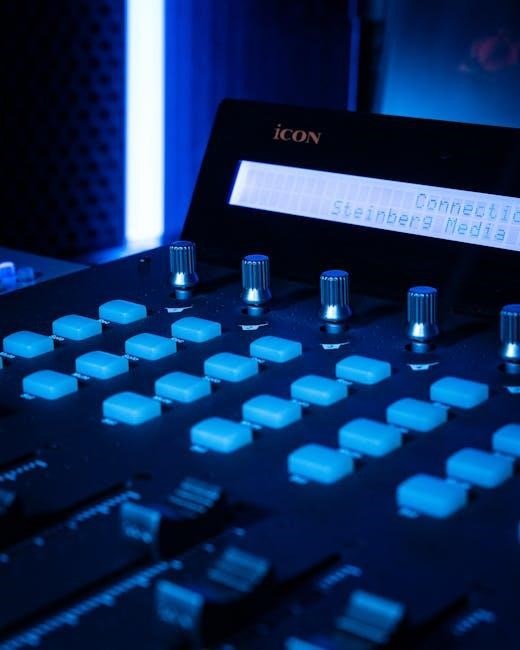
ETC’s Eos family consoles represent a powerful, flexible, and widely adopted control platform for professional lighting designers, offering robust features and intuitive operation․
These consoles, backed by Electronic Theatre Controls since 2013, provide comprehensive control over complex lighting rigs, supporting diverse entertainment venues and productions․
Understanding the Eos system’s capabilities, from basic operation to advanced show control integration, is crucial for maximizing creative potential and efficient workflow․
Overview of the Eos System
The Eos system is a fully integrated lighting control platform, encompassing hardware and software designed for seamless operation and exceptional performance․ At its core, the system revolves around the Eos software, renowned for its intuitive interface and powerful programming capabilities․ This software isn’t limited to dedicated Eos consoles; it also runs on a variety of platforms, including PCs and tablets, offering flexibility for pre-visualization and remote control․
Central to the Eos experience is the concept of a networked control environment․ Consoles can communicate with each other, remote workstations, and external devices via Ethernet, enabling collaborative workflows and distributed control․ The system supports multiple control protocols, including UDP, MIDI, and OSC (Open Sound Control), facilitating integration with other entertainment technologies․
ETC provides extensive documentation and resources, including a comprehensive user guide available on their website (www․etcconnect․com), to assist users in mastering the Eos system․ The Eos family consoles are designed to trigger events, offering a versatile solution for modern lighting design․

Eos Console History and Evolution
The Eos family’s origins trace back to a demand for a more flexible and powerful lighting control solution․ Electronic Theatre Controls (ETC) responded by developing the original Eos console, released in 2013, which quickly gained popularity for its innovative software and intuitive user interface․ This initial release established the core principles that continue to define the Eos system today․
Subsequent iterations, like the Eos Ti and Eos Apex, built upon this foundation, introducing enhanced processing power, expanded connectivity options, and refined software features․ These advancements addressed the evolving needs of lighting designers working on increasingly complex productions․ The release of Eos Family Show Control further expanded the system’s capabilities․
Throughout its evolution, ETC has remained committed to providing regular software updates and ongoing support, ensuring that Eos consoles remain at the forefront of lighting control technology․ The system’s adaptability and responsiveness to user feedback have solidified its position as an industry standard․
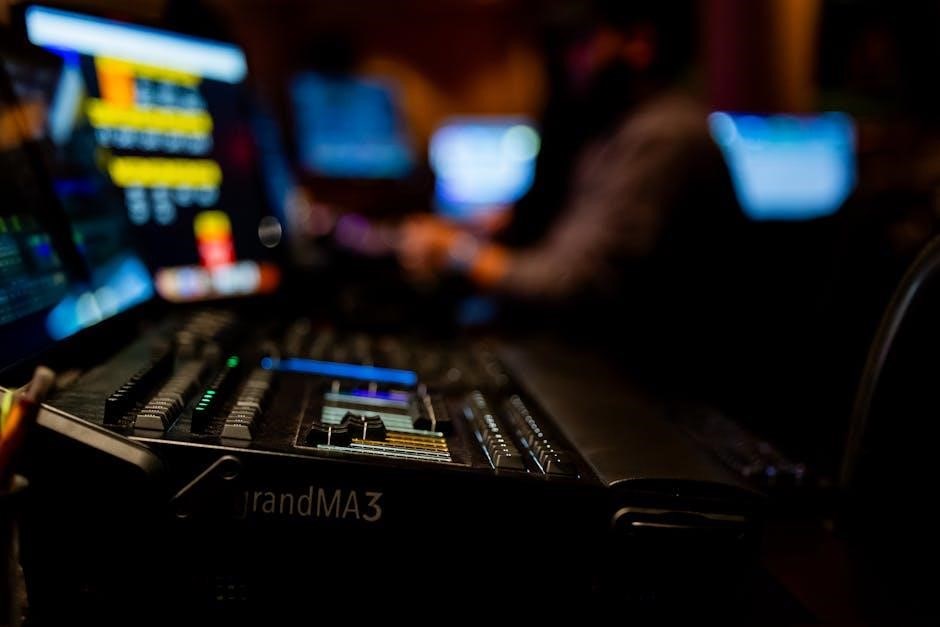
Understanding the Eos Console Hardware
Eos consoles feature robust physical components, intuitive display screens, and versatile connectivity options—networking and ports—for seamless integration into diverse production environments․
Physical Components and Layout
Eos Family consoles boast a modular design, typically including a central processing unit, integrated display screens, and a customizable control surface․ The rear and right side panels house essential connections and display the console’s model and serial number – vital for support․
The layout prioritizes ergonomic access to frequently used controls, such as faders, playbacks, and encoders․ These consoles are built for demanding environments, ensuring durability and reliability during live performances․ The physical build supports extended operation, crucial for complex shows․
Different Eos models (like Eos Ti, Eos GX, and Eos RPU) vary in size and feature sets, but maintain a consistent core layout philosophy․ Understanding the physical arrangement is fundamental to efficient operation and troubleshooting․ Careful consideration went into the placement of each component․
Display Screens and User Interface
Eos consoles feature high-resolution multi-touch displays providing a dynamic and intuitive user interface․ These screens present critical information like cue lists, channel data, palettes, and system status․ The interface is highly customizable, allowing users to tailor the display to their specific workflow preferences․
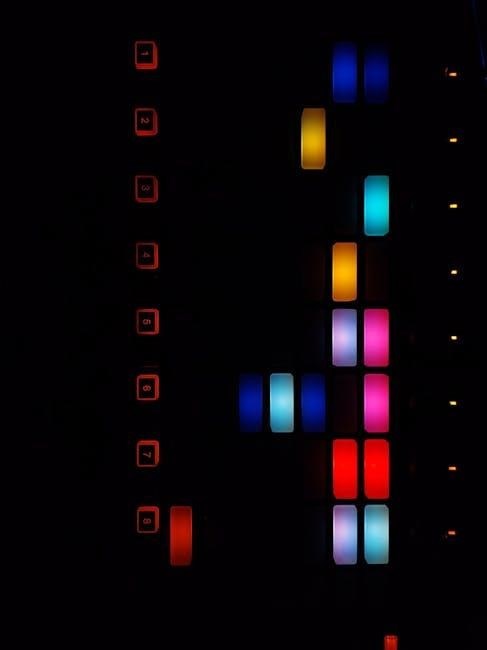
The graphical user interface (GUI) is designed for both novice and experienced lighting professionals, offering a balance of accessibility and depth․ Users can navigate through menus, adjust parameters, and monitor system performance with ease․ The touchscreens respond quickly and accurately, enhancing the overall user experience․
The display’s clarity and responsiveness are essential for busking and live editing, enabling precise control during performances․ Effective use of the display is key to unlocking the full potential of the Eos system․
Connectivity Options: Networking and Ports
Eos consoles offer extensive connectivity options, facilitating seamless integration with other entertainment control systems․ Networking capabilities include UDP, MIDI, and OSC (Open Sound Control) protocols, enabling communication with lighting fixtures, media servers, and audio consoles․
Physical ports typically include Ethernet for networking, USB for peripherals and storage, and MIDI ports for traditional MIDI control․ These connections support remote control, monitoring, and data exchange․ The console’s networking features are crucial for complex setups and distributed control systems․
Utilizing these ports and protocols allows for triggering events and synchronizing lighting with other show elements․ Proper network configuration is essential for reliable communication and optimal performance․
Core Eos Programming Concepts
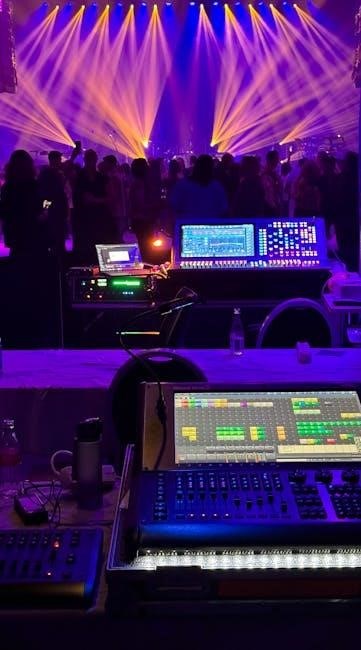
Eos programming revolves around cue lists, channels, attributes, palettes, and presets, forming the foundation for building and executing dynamic lighting designs efficiently․
Cue Lists and Sequences
Cue lists are fundamental building blocks within the Eos environment, serving as ordered collections of looks or lighting states․ Each cue within a list represents a specific snapshot of channel values, effectively defining a moment in the lighting design․ Sequences, on the other hand, offer a method to play back multiple cue lists in a predetermined order, enabling the creation of more complex and extended lighting progressions․
The power of cue lists lies in their flexibility; cues can be easily edited, copied, pasted, and reordered to refine the timing and appearance of the lighting․ Furthermore, cues can be linked, allowing for smooth transitions between looks․ Sequences provide a higher-level organizational structure, ideal for managing entire scenes or acts within a show․ Utilizing both cue lists and sequences allows designers to craft intricate and precisely timed lighting experiences, essential for professional productions․
Channels and Attributes
Channels represent the fundamental control points for individual lighting fixtures or parameters within the Eos system․ Each channel corresponds to a specific aspect of a device, such as intensity, color, pan, or tilt․ Attributes define the characteristics of these channels, specifying the type of control (e․g․, intensity, color temperature) and the range of possible values․
Eos allows for precise control over each channel and its associated attribute, enabling designers to create nuanced and dynamic lighting effects; Understanding how channels and attributes interact is crucial for effectively programming and operating the console․ The system supports a wide range of channel types and attributes, accommodating diverse fixture technologies and control protocols․ Mastering this foundational element unlocks the full potential of the Eos platform for complex lighting designs․
Palettes and Presets
Palettes within the Eos system serve as containers for storing and recalling collections of channel values, representing specific looks or color schemes․ They streamline workflow by allowing designers to quickly apply pre-defined settings to multiple fixtures or channels․ Presets, conversely, store entire fixture states, including channel values, focus, and other parameters, offering a complete snapshot of a lighting configuration․
Effectively utilizing palettes and presets significantly accelerates the programming process and ensures consistency across cues and sequences․ Eos supports various palette types, including color palettes, focus palettes, and beam palettes, providing flexibility for diverse design needs․ These tools are essential for managing complex lighting rigs and achieving precise, repeatable results, enhancing both efficiency and creative control․
Advanced Eos Features
Eos consoles unlock powerful capabilities like Magic Sheets for busking, seamless show control integration, and OSC protocol utilization for external device communication․
Magic Sheets for Busking
Magic Sheets within the Eos family consoles are customizable user interfaces designed to facilitate intuitive, real-time control – often referred to as “busking” – during live performances․
These sheets allow designers to create personalized layouts with faders, buttons, and encoders mapped to specific lighting parameters, offering immediate access to frequently adjusted attributes․
Unlike traditional cue-based programming, Magic Sheets empower operators to make dynamic changes on the fly, responding directly to the energy of the show and the performers on stage․
A recent example highlights a designer utilizing an Eos console with a Magic Sheet, minimizing macro reliance and prioritizing cue lists for a fluid busking experience․
This approach allows for a more organic and reactive lighting design, enhancing the connection between the lighting and the live performance, offering unparalleled creative freedom․
Show Control Integration
Eos Family consoles excel in integrating with external show control systems, enabling synchronization between lighting and other entertainment elements like audio, video, and special effects․
This integration is specifically designed within the Eos Family show control system, allowing for complex cues and sequences to be triggered by external sources, creating a cohesive and immersive experience․
Protocols like UDP, MIDI Raw (including MIDI Notes), and OSC (Open Sound Control) facilitate communication between the Eos console and various devices․
Designers can utilize these protocols to trigger lighting changes based on cues from a lighting console, or even external sources, enhancing the dynamic range of a production․
Resources like the ETC website (www․etcconnect․com) offer detailed documentation and support for implementing show control integration with Eos consoles․
OSC (Open Sound Control) Protocol for Eos
Eos consoles leverage the OSC (Open Sound Control) protocol, a flexible messaging system enabling communication with a wide range of devices and software applications․
This allows for remote control and monitoring of the console, as well as triggering cues and parameters from external sources, expanding creative possibilities beyond traditional control methods․
Tools like OSC-Control—ETC-Eos, a plain-text OSC messaging tool by jmcker, simplify sending commands to Eos consoles, offering a user-friendly interface for OSC implementation․
The Eos OSC Keys․pdf reference document details specific OSC commands and parameters supported by the Eos family, providing a comprehensive guide for developers and designers․
Utilizing OSC, designers can integrate Eos with custom applications, interactive installations, and other systems, creating dynamic and responsive lighting experiences․
Eos Network Configuration
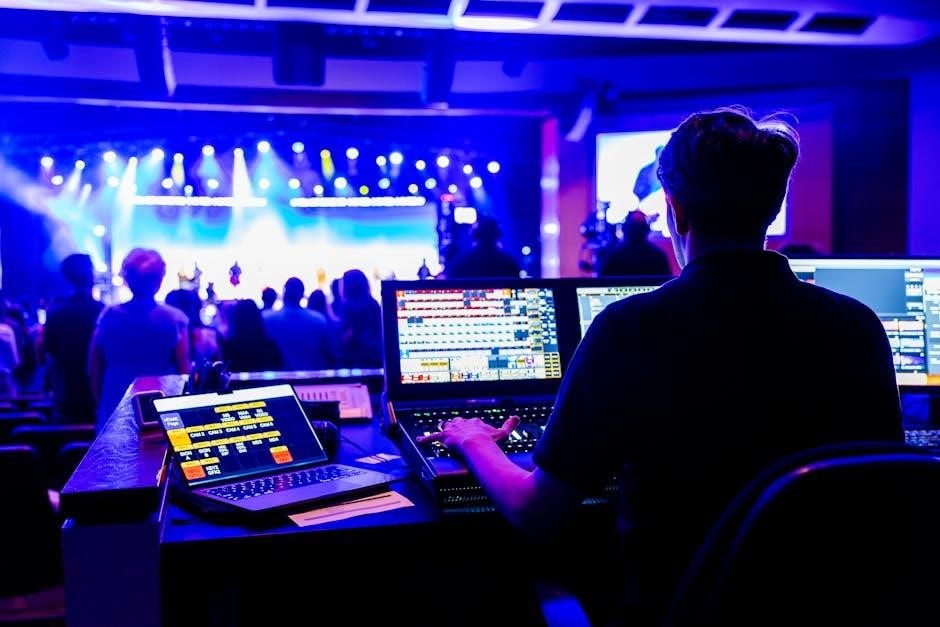
Eos consoles support network setups using UDP, MIDI, and MIDI Raw protocols, enabling communication and control across various connected devices and systems․
Setting Up Eos Networking (UDP, MIDI)
Establishing network connectivity on an Eos console involves configuring settings for UDP (User Datagram Protocol) and MIDI (Musical Instrument Digital Interface) communication․ For UDP, define the destination IP address and port number within the console’s network settings to transmit data to external devices or software․
MIDI configuration allows the Eos console to send and receive MIDI messages, enabling control from or to MIDI-compatible devices․ This requires specifying the MIDI input and output ports․ Proper network setup is vital for remote control, show control integration, and monitoring capabilities․
Ensure correct IP addressing and port assignments to avoid conflicts and guarantee reliable data transmission․ Refer to the ETC documentation for detailed instructions and troubleshooting tips regarding network configuration within the Eos family consoles․
Remote Control and Monitoring
Eos consoles facilitate remote control and monitoring through established network connections, enabling operators to manage lighting systems from various locations․ Utilizing UDP, MIDI, or OSC (Open Sound Control), external devices and software can send commands to the console, adjusting cues, palettes, and parameters in real-time․
Monitoring capabilities allow remote observation of the console’s status, including active cues, channel levels, and system health․ This is particularly useful for troubleshooting and collaborative workflows․ Secure network configurations are crucial to prevent unauthorized access and maintain system integrity․
ETC provides comprehensive documentation detailing the setup and security considerations for remote access․ Proper implementation ensures efficient control and reliable monitoring of lighting systems, enhancing operational flexibility and responsiveness․
Troubleshooting Common Eos Issues
Addressing startup errors, connectivity problems, and software glitches is vital for smooth operation; ETC provides resources and support for quick resolution․
Console Startup and Error Messages
During Eos console startup, various messages may appear, indicating the system’s status․ Familiarizing yourself with these messages is crucial for identifying potential issues․ A successful startup typically displays the Eos software loading sequence, followed by the main user interface; However, errors can occur, ranging from minor warnings to critical failures preventing operation․
Common error messages often relate to missing or corrupted system files, hardware conflicts, or network connectivity problems․ The console model and serial number, located on the rear or right side panel, are essential when contacting ETC support for assistance․ Detailed error logs, accessible through the console’s menus, provide valuable diagnostic information․ Always consult the official ETC documentation or community forums for specific error code explanations and recommended troubleshooting steps․ Remember emergency service is available from all ETC offices․
Connectivity Problems and Solutions
Establishing reliable connectivity is vital for Eos console operation, encompassing networking (UDP, MIDI) and port functionality․ Common issues include failed network connections, unresponsive devices, and communication errors․ Begin troubleshooting by verifying physical connections – cables, ports, and network switches․ Ensure correct IP address configurations and network settings within the Eos software․
For UDP or MIDI communication, confirm that the correct ports are open and that no firewalls are blocking the signal․ If using OSC (Open Sound Control), verify the OSC server is running and accessible․ The Eos Family consoles support various protocols for triggering events․ Refer to the ETC website (www․etcconnect․com) for detailed network configuration guides and troubleshooting resources․ If problems persist, consult the Eos community forums for shared solutions and expert advice․
Software Updates and Maintenance
Regular software updates are crucial for maintaining optimal performance, stability, and access to the latest features on your Eos console․ ETC frequently releases updates addressing bug fixes, enhancing functionality, and improving security․ Download updates directly from the ETC website (www․etcconnect․com) and carefully follow the provided installation instructions․
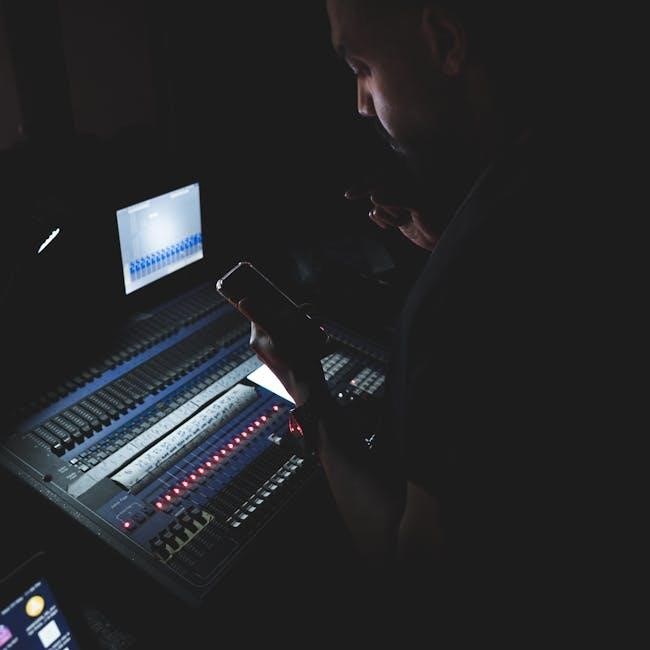
Prior to updating, it’s recommended to back up your show files and console settings to prevent data loss․ Routine maintenance includes clearing temporary files, optimizing the system, and periodically checking for hardware issues․ Keep the console’s operating system and associated software components current․ Refer to the official ETC documentation for detailed guidance on software updates and best practices for console maintenance, ensuring a reliable and efficient workflow․

Resources and Support
ETC’s website (www․etcconnect․com) provides extensive documentation, while vibrant community forums offer peer-to-peer support and valuable insights for Eos users․
ETC Website and Documentation
Electronic Theatre Controls’ official website, etcconnect․com, serves as the primary hub for comprehensive Eos family console resources․ Users can access detailed product manuals, software downloads, and application notes covering all aspects of console operation․
The website features a dedicated support section with frequently asked questions (FAQs), troubleshooting guides, and knowledge base articles addressing common issues․ Furthermore, ETC provides downloadable reference materials, including the Eos OSC Keys PDF, detailing OSC (Open Sound Control) protocol implementation for advanced control scenarios․
These resources are regularly updated to reflect the latest software versions and feature enhancements․ The documentation is designed to cater to users of all skill levels, from beginners to experienced lighting professionals, ensuring a smooth learning curve and efficient problem-solving․
Eos Community Forums and Support
Beyond official ETC resources, a vibrant and active Eos community thrives online, offering peer-to-peer support and knowledge sharing․ Dedicated forums and online groups provide platforms for users to discuss challenges, exchange programming techniques, and collaborate on projects․
These forums are invaluable for troubleshooting complex issues and discovering innovative solutions․ Experienced Eos programmers readily assist newcomers, fostering a collaborative learning environment․ Access to emergency service is available from all ETC offices outside normal business hours, ensuring timely assistance when needed․
The community’s collective expertise complements ETC’s official documentation, creating a robust support network for Eos console operators worldwide․ This collaborative spirit enhances the user experience and promotes continuous learning․